When we talk about Franciacorta, we refer not only to the region but also to the wine and the production method that characterize it. The Franciacorta Method follows the classic or Champenoise method with precise rules established by the Production Regulations, among the strictest in the world for its category, ensuring quality at every stage, from harvest to bottle fermentation. The Franciacorta Consortium oversees these standards, ensuring that every bottle is synonymous with quality, tradition, and respect for the region.
Castelveder Franciacorta DOCG
At Castelveder, we are proud to have contributed to creating this tradition. Every bottle we produce since 1975 is the result of meticulous work and deep respect for the Franciacorta method. During our guided tours and tastings in the cellar, we accompany you on a journey to discover this extraordinary process, sharing with you the history, secrets, and magic that make our wines unique.
Phase One
The harvest.
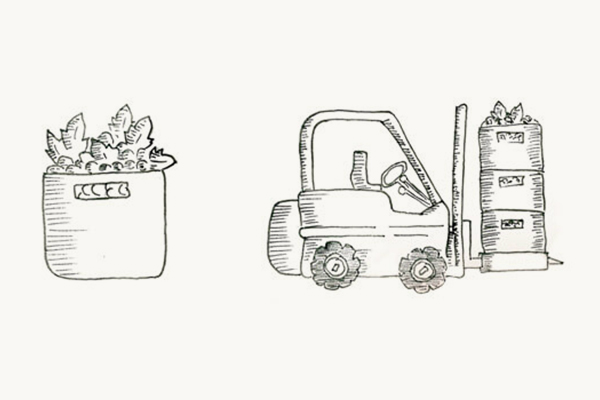
The production method of Franciacorta involves the use of noble white grape varieties such as Chardonnay, Pinot Bianco, and Erbamat, along with the red grape variety Pinot Noir. The grapes are meticulously hand-picked into plastic crates and transported to the cellar on carts.
Phase Two
The pressing.
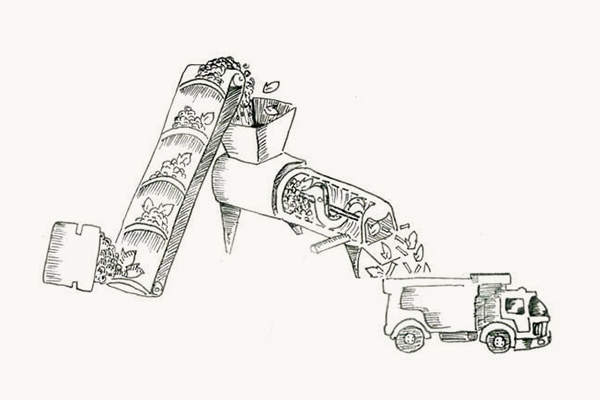
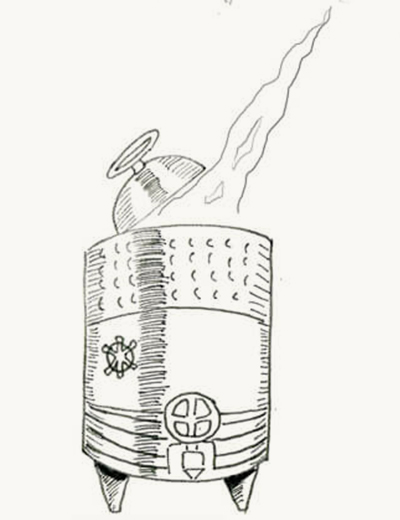
The crates are emptied onto the conveyor belt and sent to the press, where the whole grapes are gently pressed.
Phase Three
The must.
With the gentle pressing of the grapes, the “free-run” must is obtained for the production of the base Franciacorta, which will be blended to form the cuvée. The cuvée is a mixture of base Franciacorta wines, often of different origins and ages, selected after careful tastings. The pomace obtained from the processing by-products is taken to the distillery, where it will be turned into Grappa.
Phase Four
The tirage.
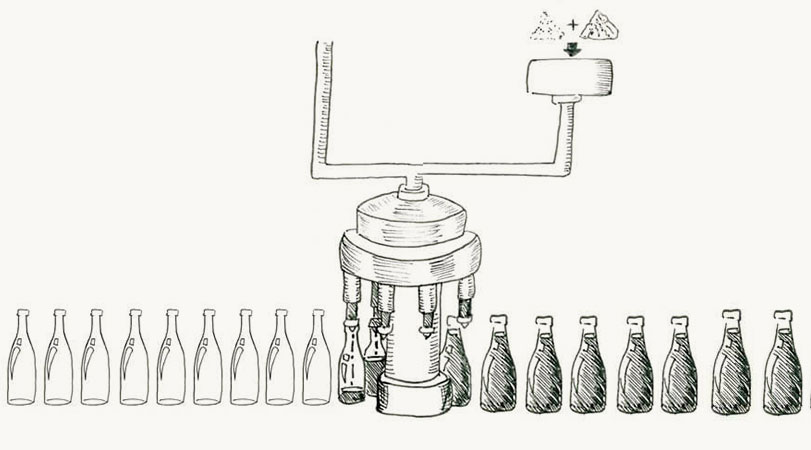
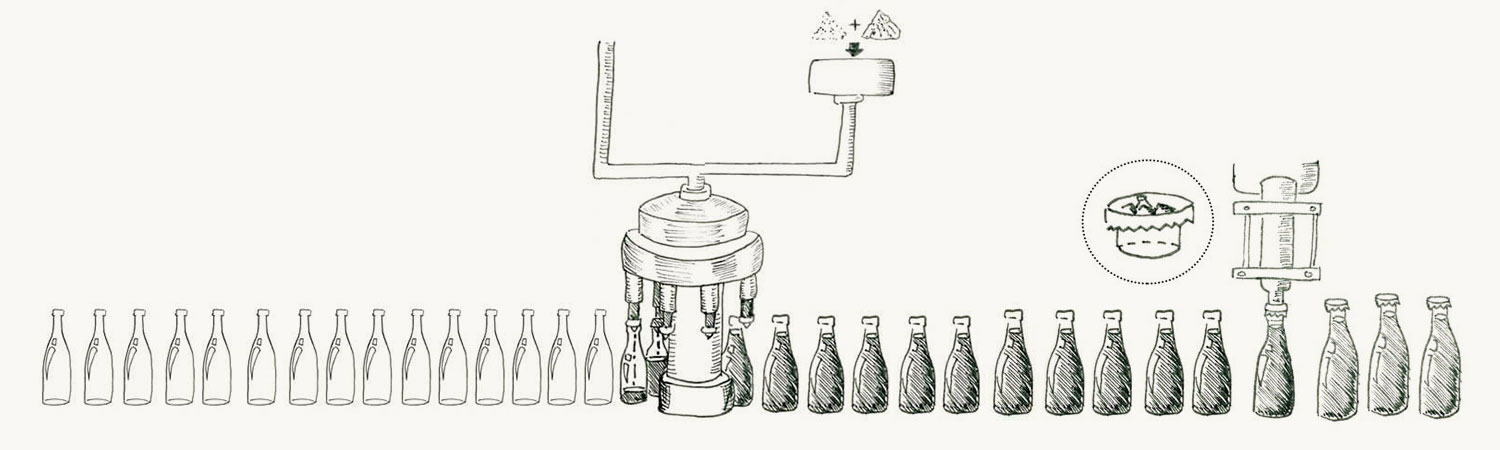
The spring following the harvest, the base wine is prepared for the tirage process. Sugars and selected yeasts are added, initiating the second fermentation.
Phase Five
The crown cap.
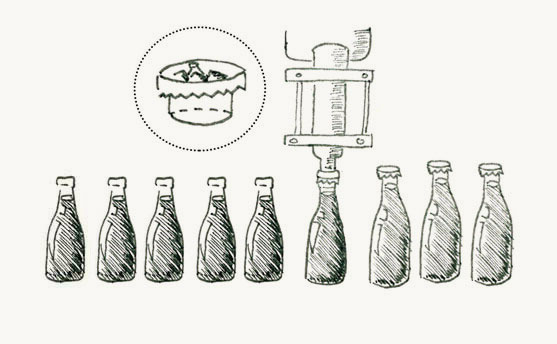
The bottles are sealed with a metal cap.
Phase Six.
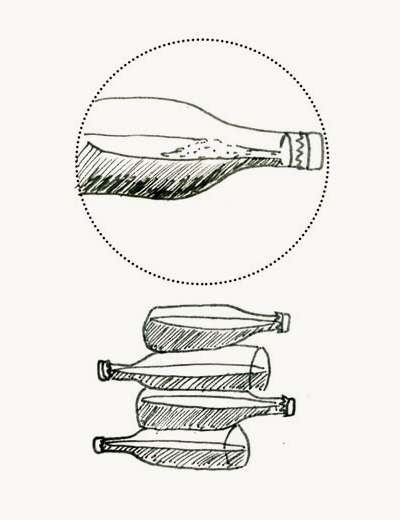
The fermentation.
They are stacked horizontally in cool, dark cellars, remaining in contact with the lees for a minimum of 18 months, during which the remaining yeasts form sediment in the bottles.
Minimum 24 months: Franciacorta Rosé and Satèn
Minimum 30 months: Franciacorta Millesimato
Minimum 60 months: Franciacorta Riserva
The refermentation pressure is 5 atmospheres for the Satèn and 6.5 for the Brut.
Phase Seven
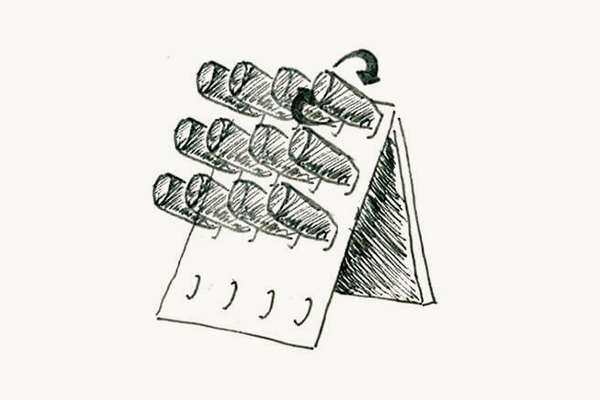
The riddling.
To eliminate the sediment, the riddling process is necessary, which involves rotating the bottles, placed on special racks, by one-eighth of a turn each day for about 20 days.
Phase Eight
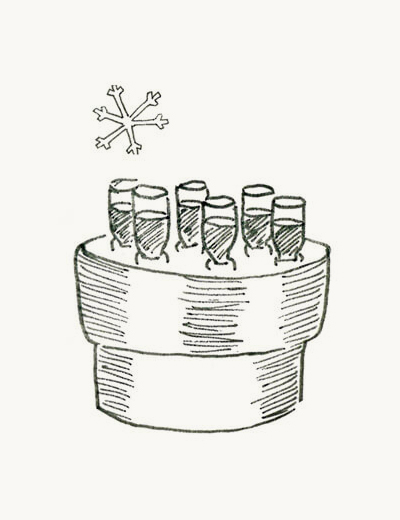
The disgorgement.
The sediment is removed through the disgorgement process, where the bottles are kept upright with the neck submerged in a chilling solution. To restore the level, a “dosage syrup” made of base Franciacorta wine and sugar is introduced.
The types of Franciacorta are:
Non Dosato: natural sugar residue of the wine less than 3 grams per liter
Extra Brut: sugar residue less than 6 grams per liter
Brut: sugar residue less than 12 grams per liter
Extra Dry: sugar residue between 12 and 20 grams per liter
Sec, Dry: sugar residue between 17 and 35 grams per liter
Demisec: sugar residue between 33 and 55 grams per liter
Phase Nove
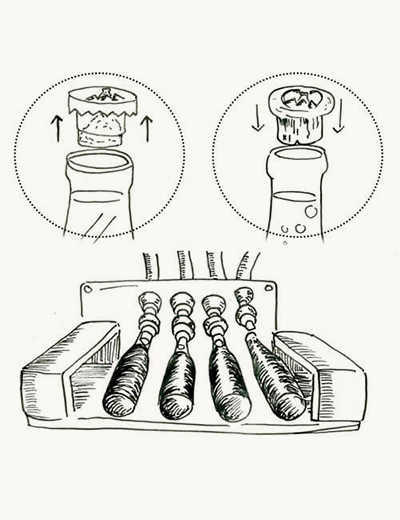
The cork stopper.
The Franciacorta is ready to be sealed with its cork stopper, protected by the typical metal cage and the Italian state mark that identifies DOCG wines, Denominazione di Origine Controllata e Garantita.
Phase Ten
The labeling.
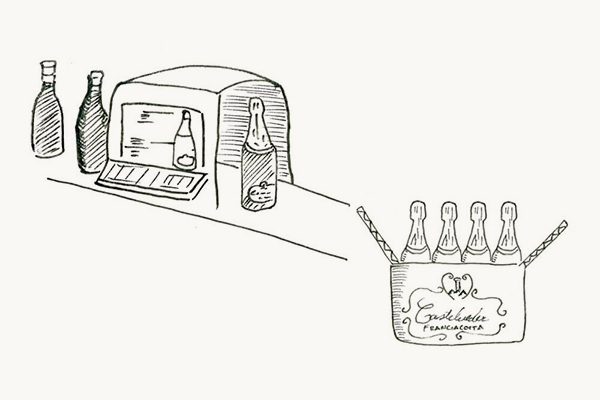
At this point, the wine is labeled and packaged in cardboard boxes, ready to be marketed.
Phase eleven
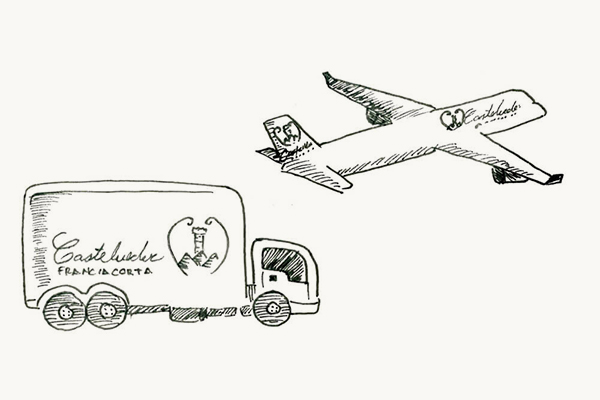
The distribution.
Through various distribution channels, Franciacorta Castelveder is distributed in Italy, Europe, Asia, South America, Canada, and the United States.
Learn more
Visit our cellar.
Discover the art of Franciacorta right in the heart of our cellar: an experience of flavors, tradition, and passion awaits you at Castelveder.